Security Camera Installation in Guelph
Wired CCTV and IP camera systems for Guelph homes, shops, restaurants, offices, warehouses and rural properties — cameras placed where they actually see something, PoE cable run properly, an NVR sized to the retention you need, and remote viewing set up on your phone before anyone leaves. Insured installers, a written quote before the work is booked.
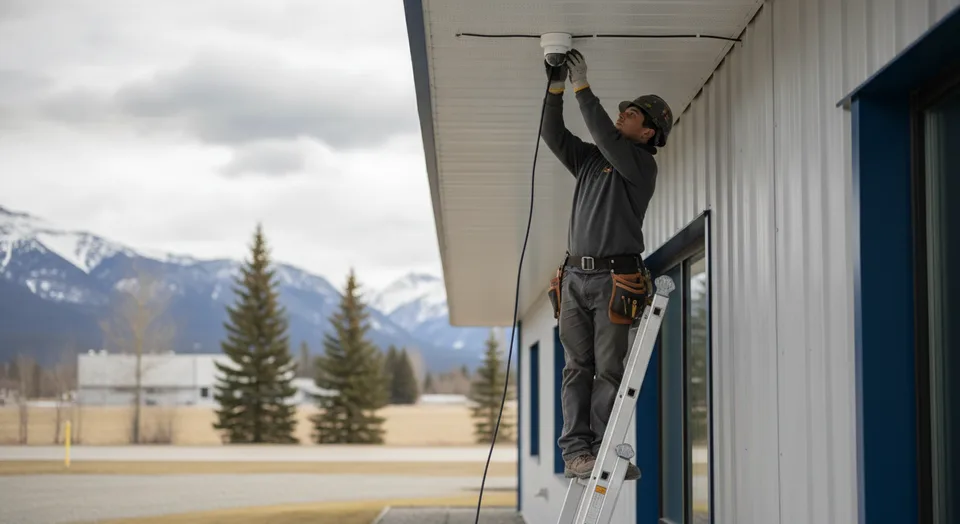
Most camera problems in Guelph are coverage problems, not camera problems. Somebody buys four cameras, mounts them under the soffit at the four corners of the building, and ends up with four wide shots of a driveway and nothing usable at the door, the till, the gate or the loading dock. The resolution was never the issue. The angle, the mounting height and the lighting were. Guelph makes that worse in specific ways. The century houses in The Ward, Old University and around Exhibition Park have brick exteriors, plaster walls and no structured cabling anywhere, so every run is a real job. The south-end subdivisions have a builder doorbell camera at the front door and nothing covering the side gate, the backyard or the garage. Downtown storefronts on Wyndham have glass frontage that blows out in daylight and goes dark at night. The business parks and industrial streets have yards, fence lines and trailer parking that need distance, not more megapixels. And rural Wellington County properties have a shop or a barn two hundred feet from the house with no cable and no usable Wi-Fi. This is the booking line for a vetted Guelph security camera installer that works across all of it. You describe the property and what you actually want to see. You get a written quote. Nobody runs cable until you have agreed to the number.
What We Install
Homes, storefronts, restaurants, offices, warehouses, yards and rural properties across Guelph and Wellington County — new systems, cabling, and repairs or upgrades to what you already have.
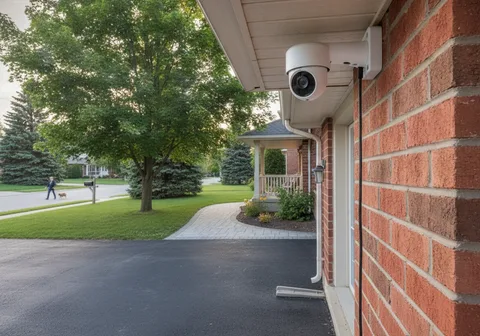
Home Security Camera Installation
Wired PoE cameras for houses, townhouses and rural properties — doorbell, entry, driveway, garage and yard coverage that actually sees a face and a plate.
Learn more →
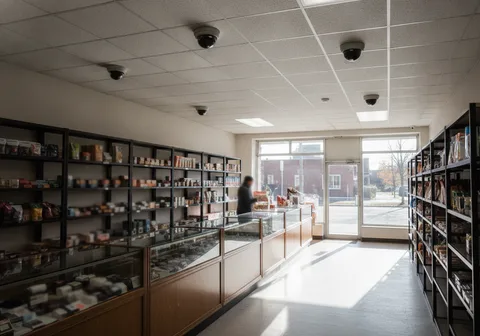
Business & Retail Camera Systems
Camera systems for shops, restaurants, offices and service businesses — tills, counters, entries, back doors, alleys and stock areas, with remote viewing across more than one location.
Learn more →
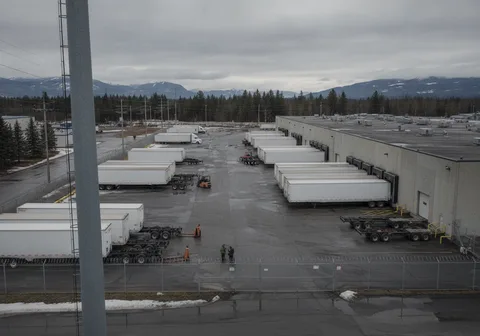
Warehouse, Industrial & Yard Systems
Coverage for warehouses, shops, yards and industrial property — docks, overhead doors, gates, fence lines and trailer parking, with the cable engineering that distance actually requires.
Learn more →
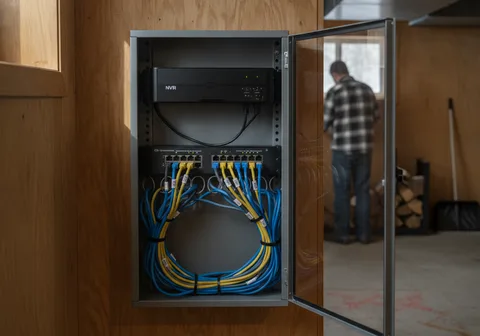
NVR Setup, Cabling & Remote Viewing
The part nobody sells properly: recorder and storage sized to your retention, cable run and terminated to spec, PoE that holds up, and remote viewing that still works next year.
Learn more →
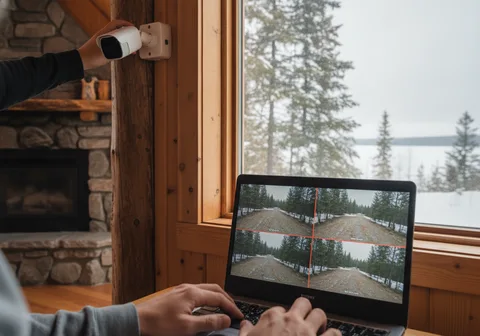
Repairs, Upgrades & Relocation
Fixing, upgrading and re-aiming what is already on the wall — including systems installed by somebody who has stopped answering the phone.
Learn more →
Security Cameras in Guelph: What the Property Actually Needs
Century homes in The Ward, Old University and Exhibition Park. These are the houses where a camera quote and a camera install are two different conversations. Solid brick or brick-over-frame exteriors, plaster and lath inside, balloon framing in some of the older stock, narrow soffits, and no structured cabling anywhere in the building. There is no empty conduit to pull through and no drop ceiling to hide a run in. Cable gets routed through the basement joist bays and up an interior wall, or fished down from the attic where there is attic access, or run in exterior-rated conduit along a soffit line where the wall will not take a drill. Masonry gets proper anchors, not plastic plugs in a mortar joint. On a heritage-designated property, anything fastened to a street-facing facade is worth checking with the City first. It is slower work than a new build and the quote says so before the day, not after.
South-end subdivisions: Westminster Woods, Clairfields, Pine Ridge and Grange Hill East. The runs here are easy. The coverage is usually wrong. Most of these houses came with a builder doorbell camera and nothing else, which gives you a chest-height fisheye of whoever is standing at the front door and zero coverage of the driveway, the side gate, the garage interior or the back yard. The fix is not a better doorbell. It is two to four wired cameras with real angles — driveway and vehicles, side gate, rear yard, and the garage if there are tools or bikes in it — feeding a recorder so you have footage that stays put instead of a cloud clip that expires. Unfinished basements, open joist bays and accessible attics make these installs quick, which is why the price gap between a south-end house and a century home downtown is as wide as it is.
Downtown retail and restaurant frontage: St. George's Square and Wyndham Street. Storefront cameras fail for a lighting reason far more often than a camera reason. A camera pointed out through a big glass front at midday sees a silhouette and a bright street. The same camera at night sees its own reflection in the glass. Cameras go inside pointed at the till and the service counter, at the door at face height rather than ceiling-corner height, on the back-of-house door where deliveries and staff come and go, and on the rear alley if the business has one. Restaurants add the kitchen line, the walk-in and the patio. Shared entries in mixed-use buildings with apartments above need a conversation before anything is mounted, because footage of a shared hallway or a neighbour's door is not the same thing as footage of your own store. Most downtown buildings are old, so cable runs use existing chases, the basement, or surface conduit painted to match.
Hanlon Creek Business Park, Speedvale and Woodlawn, York Road and Watson. This is the side of the trade where the money and the difficulty both live. A warehouse or an industrial yard is not a bigger house. The problems are distance, lighting and cable length. A fence line two hundred metres out needs a camera with the right lens and a light source, not a wide-angle dome that turns a person into four pixels. Trailer parking and loading docks need angles that catch a door opening and a plate on the way in, which means mounting height and approach direction matter more than the spec sheet. Copper runs have a hard distance limit, so long yards get intermediate switch locations, fibre, or a purpose-built wireless link between buildings. Add overhead door interiors, the shipping office, the yard gate, and the dumpster and scrap area, which is where most of the after-hours activity on an industrial property actually happens. These systems get quoted after a site walk, not over the phone.
Rural Wellington County: Puslinch, Aberfoyle, Morriston, Arkell, Eden Mills, Ariss and Rockwood. Rural properties break the residential playbook completely. The driveway is three hundred feet long, the detached shop is well past where the house Wi-Fi stops, and there is a barn or a set of outbuildings with no line of sight to anything. The three honest options are a buried conduit run with locates done first, a directional wireless bridge between two buildings that can actually see each other, or a second small recorder at the outbuilding that reports back. Which one is right depends on the distance, the trees and whether there is already power out there. Long driveways want a camera partway down rather than one at the house squinting at a gate. Yard lighting matters more than camera specs in the dark, and most rural properties have less of it than the owner thinks.
Serving Guelph & Surrounding Areas
Low-voltage camera cabling and running a new circuit are not the same trade. If a job needs a new outlet, a sub-panel feed or any work inside a panel, that is licensed electrical work under the Electrical Safety Authority and it gets handed to an electrician rather than improvised. Burying conduit to a detached shop, a barn or down a long rural driveway starts with locates — Ontario One Call takes the request and it costs nothing. Recording in shared or public-facing space carries privacy considerations that are worth understanding before a camera is aimed: the Office of the Privacy Commissioner of Canada and the Information and Privacy Commissioner of Ontario both publish general guidance, and a business owner should confirm what applies to their own situation. On a heritage-designated building or a street-facing facade in the older core, check with the City of Guelph before anything is fastened to the front of the building.
Frequently Asked Questions
How much does security camera installation cost in Guelph?
For a house, most complete wired jobs land somewhere in the $1,200 to $3,500 range depending on camera count, how hard the cable runs are and what recorder it feeds. A four-camera system on a south-end house with an open basement sits near the bottom of that. The same four cameras on a century home in The Ward with brick walls and no attic access sits well above it, because the labour is in the cable, not the cameras. Commercial and industrial systems are quoted after a site walk. Full planning ranges are on the 2026 cost guide, and you get a firm written quote before any work is booked.
Wired or wireless — which should I get?
Wired, for anything you actually depend on. A PoE camera takes power and data down one cable, so there is no battery to charge, no Wi-Fi drop when the microwave runs, and the footage records locally whether or not the internet is up. Wireless is the right answer in exactly two situations: a rented unit where you cannot drill, and a detached building where running cable is genuinely impractical. Even then the recorder stays wired. Anyone who quotes you a fully wireless system for a house they have not looked at is quoting the easy job, not the right one.
Can I see the cameras on my phone?
Yes, and it gets set up and tested before the installer leaves — on your phone, not just theirs. The recorder stores the footage on site; the app gives you live view, playback and clip export from wherever you are. You will also be shown how to pull a clip off and save it, because that is the part people always need at the worst possible moment and have never practised.
How long does footage stay on the recorder?
That is a storage decision, not a fixed rule. It depends on camera count, resolution, frame rate and whether the system records continuously or only on motion. A small home system on motion recording typically holds several weeks. A busy commercial site recording continuously on a dozen cameras fills the same drive far faster. Tell us how far back you want to be able to look and the recorder and drive get sized for that number rather than guessed at.
Do you work on business and industrial sites, or just houses?
Both, and the commercial side is a large part of the work — retail and restaurants downtown around St. George's Square and Wyndham, offices and light industrial in the Hanlon Creek Business Park, shops and service businesses along Speedvale and Woodlawn, and warehouses and yards on York Road and through the Watson industrial area. Commercial jobs get a site walk before a quote because cable distance, lighting and yard coverage decide the design.
Can you fix or add to the system I already have?
Usually, yes. Existing cable is often reusable even when the cameras and recorder are not, and reusing the runs is where most of the savings are. Common jobs are replacing dead cameras, swapping a failing recorder or drive, moving cameras that were aimed badly in the first place, extending a builder-installed doorbell setup to full coverage, and getting remote viewing working again after an internet or router change. Tell us what is on the wall now and roughly how old it is when you call.
Ready to Get Started?
Call 548-457-0379 or send the form for a written quote for security camera installation in Guelph.